How to plan your pension - A step-by-step process
Planning your pension is one of the most important financial decisions you'll make, and the sooner you start, the better. Yet many people in the UK fail to effectively plan for their retirement, either because they aren’t sure how to go about it, or because they believe that retirement planning is something they can leave until they’re older.
Why does pension planning matter?
Pension planning matters because your retirement could last for 20, 30 or even 40 years, and your pension will be the key to funding your lifestyle during all of that time.
If you’re in your 40s or 50s then retirement might seem a million miles away right now, but the earlier you start planning for retirement and the more systematically you approach pension planning, the more comfortable and financially secure your retirement is likely to be.
Why is it important to start planning your pension early?
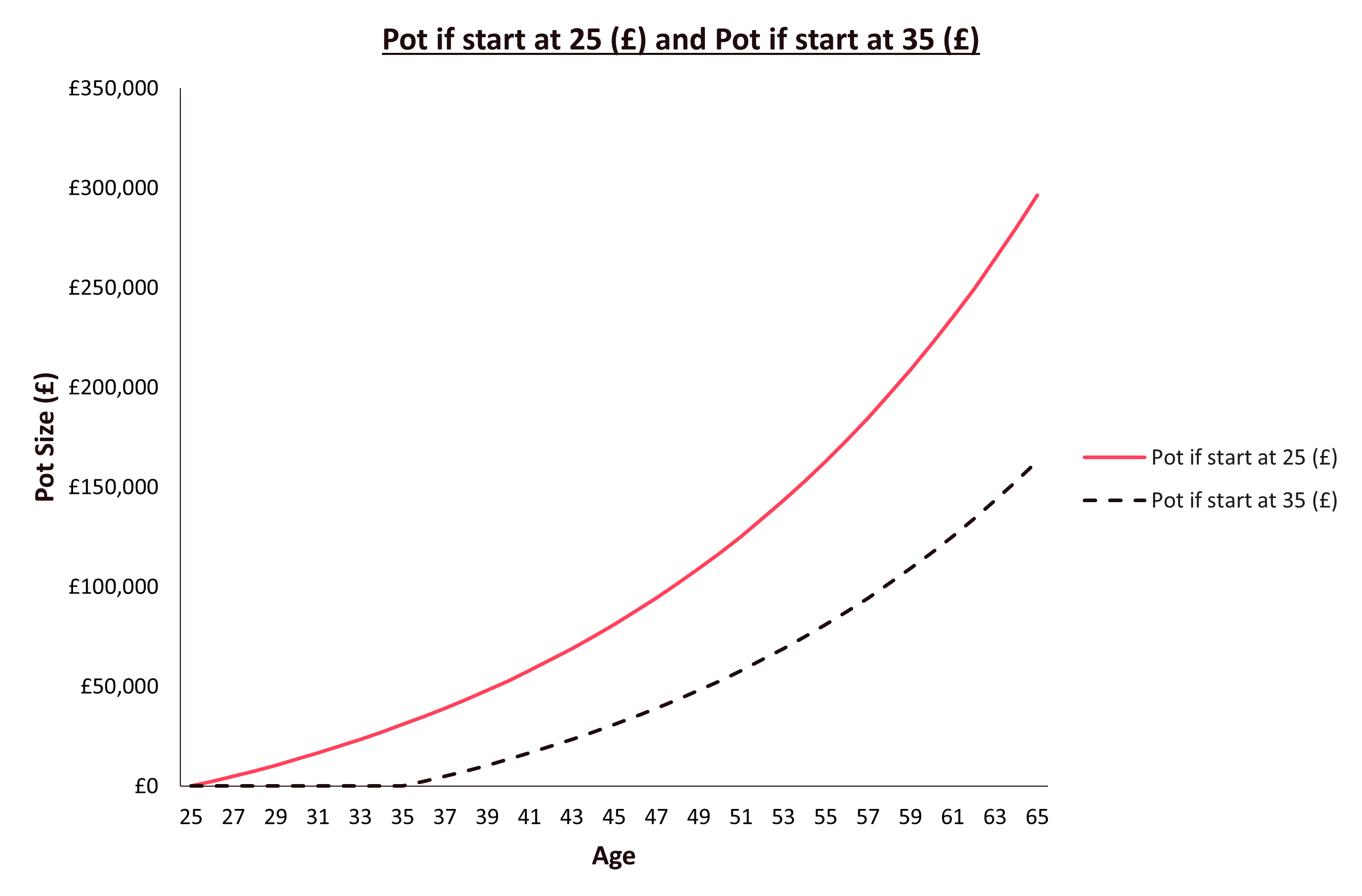
By starting pension planning early, you’ll have more time to benefit from the power of compound growth. Someone who begins contributing £200 to their pension pot each month at the age of 25 has the potential to accumulate a lot more in their pension pot by the time they retire than someone who starts contributing at 35, even if the 35 year old contributes more on a monthly basis.
An example: If you began contributing £200 a month to your pension at the age of 25 and continued with the same amount until you were 65 (40 years of contributions in total), then at a Compound Annual Growth Rate (CAGR) of 5% your pension pot would be approximately £290,000 by the time you retire at 65. Starting the same contributions at the age of 35 (30 years) with a 5% CAGR would result in a pension pot of £156,500 at the age of 65, which is almost half the final amount despite only starting 10 years later.
Starting early also allows smaller, more manageable contributions that can increase gradually as your salary grows. Late starters often need to make bigger contributions in order to plug the gap in their desired retirement income.
Is it worth starting a pension at 50?
It’s definitely worth starting a pension at 50, because although you’ll have far fewer years to build up your contributions and benefit from compound growth than if you’d started in your 20s or 30s, you could still have 15 to 17 years (or even more, if you retire later than the State Pension Age). That could result in a surprisingly big pension pot.
For instance, if you started contributing £300 every month from the age of 50 until the age 67, and if the investments within your pension plan grew in value at an average compound annual growth rate of 5% during that time, then you’d have a pension pot of more than £85,000 at retirement.
It’s also worth remembering that for many people their 50s are their prime earning years, which means if you open a private pension at the age of 50 your contributions could be quite a bit bigger than you might have been able to afford when you were younger.
Is it worth starting a pension at 55?
Starting a pension at 55 could still give you 10 or more years of pension contributions by the time you retire, so it’s definitely still worth starting one at this age.
It’s probably a good idea to ensure your pension is invested in funds that are lower risk though, because if the market falls you wouldn’t have much time to recover lost ground.
With 12 years until State Pension age, the key is to focus on the steady accumulation of contributions, rather than opting for riskier investments in a bid to achieve more dramatic growth.
Is it worth starting a pension at 60?
Starting a pension at 60 could still be worthwhile, although it will largely depend on when you intend to retire.
If you’re planning to stop working when you reach State Pension Age, then that’ll still give you 7 years of pension contributions, which could amount to tens of thousands in retirement savings.
Of course, if you’re hoping to retire early then you should hopefully have already accumulated other forms of retirement income, whether that’s workplace pensions, ISAs, general investment accounts, or rental property.
How does inflation and the cost of living impact your pension?
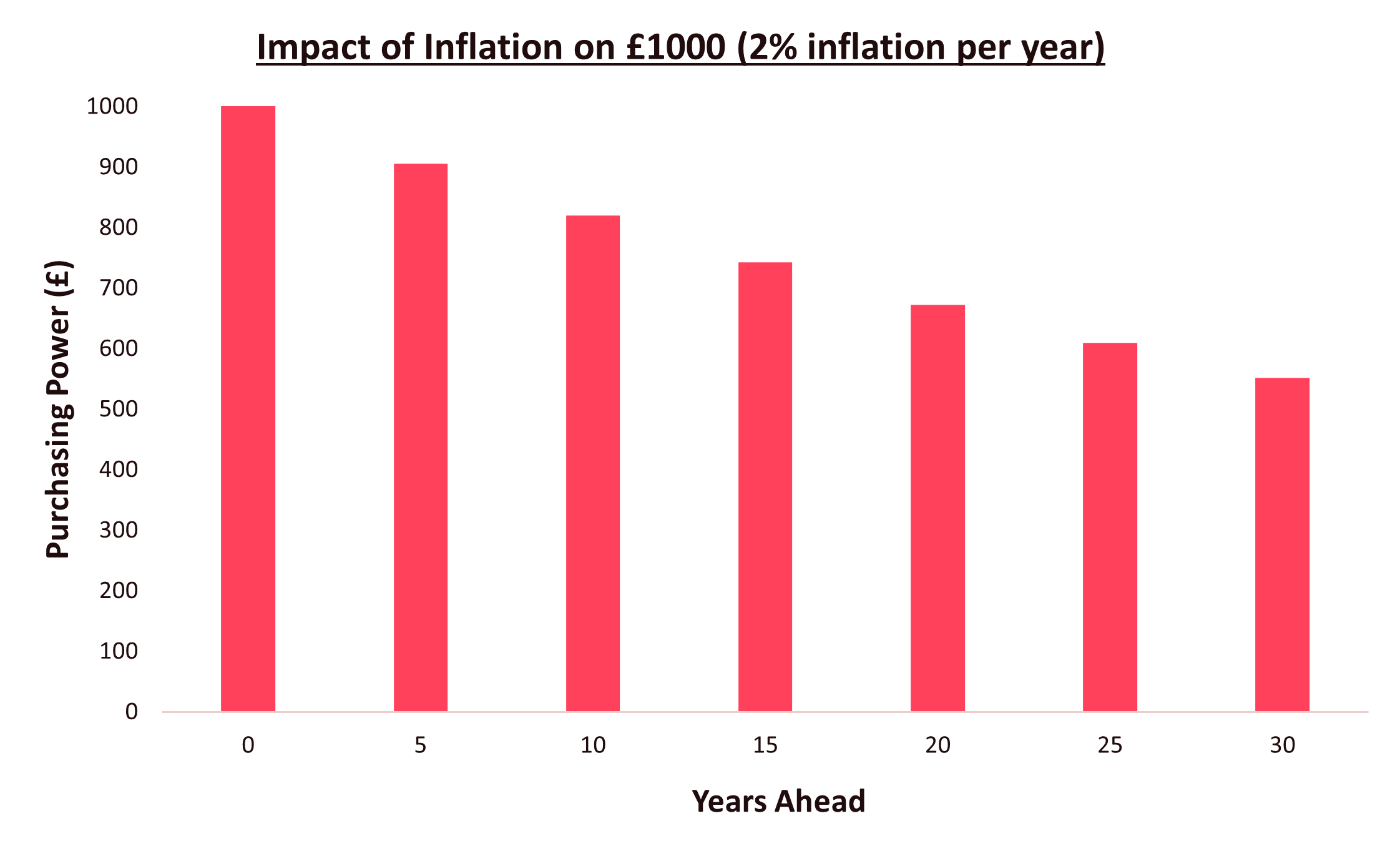
Inflation erodes the purchasing power of money over time, meaning £1,000 today will buy less in the future. The Bank of England’s inflation target is 2% a year, and if the central bank was to achieve that rate of inflation consistently then costs would double roughly every 36 years.
In practice, that means if your retirement lasted for 30 years your pension would lose almost half of its purchasing power during that timeframe unless your pension offers some degree of inflation-protection.
How do I plan my pension?
When you’re planning your pension savings you should be systematic in your approach, following a step-by-step process in order to ensure you’ve considered all aspects of your retirement plan.
- Assess your current situation
- Define your retirement goals
- Decide on your contribution strategy
- Consider investment choices
- Planning for different life stages
- Assess pension freedoms and access options
- Planning if behind
- Estate planning and passing on your pension
- Reviewing and adjusting your plan
- Check in regularly on contributions and performance
1. How do I assess my current pension situation?
You can’t plan for the future if you don’t know where you are today, so the first step is to assess your current pension savings.
What existing pension pots do I have?
- Workplace pensions: Check with current and previous employers about any workplace pensions you might have been enrolled in. You may have multiple workplace pensions from different jobs, each with different providers, contribution levels, and investment options. Gather annual statements and contact details for all of these pension schemes.
- Personal pensions: Review any SIPPs, stakeholder pensions, or standard personal pensions you've arranged independently. These might include pensions set up during periods of self-employment, additional voluntary contributions, or other private pensions you opened in order to supplement your workplace pension.
- Legacy pension schemes: Don't forget older pensions that might have different terms, such as final salary schemes, additional voluntary contribution accounts, or pensions with guaranteed benefits that could be valuable.
Use the government's pension tracing service if you've lost track of old pensions. Many people accumulate forgotten pensions throughout their careers, and when combined these can represent significant retirement savings even if each pension pot is fairly small on its own.
How can I estimate my State Pension entitlement?
You can review your National Insurance record through your Government Gateway account to see your contribution history. This shows qualifying years, gaps, and credits that affect your State Pension entitlement.
The government's online forecast tool also provides your State Pension projection based on your actual contribution record, showing your current entitlement and projections assuming continued contributions until State Pension age.
How do I identify gaps or inconsistencies in my pension contributions?
Your National Insurance record might show gaps during periods of unemployment, low earnings, or time spent abroad. Some of these gaps might already be filled if you qualified for National Insurance credits during some of those periods, but for others you might be able to plug gaps by paying voluntary National Insurance contributions.
2. How do I define my retirement goals?
It’s a good idea to decide on clear retirement goals, as this will make retirement planning easier. The main factors to incorporate into these retirement goals are the age at which you’d like to retire, and the lifestyle you’d like to enjoy in retirement.
Those factors will then determine how much you’ll need to save in your pensions in order to make that possible.
When do I want to retire?
The earlier you retire the more money you’ll usually need to fund your retirement, so deciding when and how you retire is a major decision.
- Early retirement vs. traditional retirement age: Early retirement before State Pension age requires bridging the gap until you’re able to access your State Pension. This might mean accumulating larger pension pots or having alternative income sources to fund the early retirement years, until you hit State Pension age.
- Hard stop or phased retirement? Consider whether you want to stop working entirely when you retire, or whether you’d prefer a phased retirement involving part-time work or consultancy. A hard stop will likely require more pension savings than a phased retirement.
What retirement lifestyle do I want?
You can estimate your required retirement income by considering your current expenses and how they might change in retirement. For instance, housing costs might fall if you plan to have paid off your mortgage by the time you retire, but healthcare and travel expenses might increase.
- Housing: Housing decisions can have a major impact on the amount of retirement income you need. Will you stay in your current home, downsize, or move to a different area? Will you be mortgage-free or will you still have mortgage payments to meet?
- Travel and leisure: Consider costs for travel, hobbies, family support, or other activities you might want to pursue in your retirement.
- Healthcare: It would be a good idea to factor in potential healthcare costs, including private healthcare, dental care, or long-term care needs. These costs tend to increase with age and might not be fully covered by the NHS.
- Inflation: You should plan for retirement lasting 20 to 30 years, and factor inflation into your calculations for that time period. What seems like an adequate amount of money now might become insufficient without inflation protection.
3. Which pension contribution strategy should I choose?
Your strategy for pension contributions will determine the size of the pension pot (or multiple pots) you accumulate by the time you retire. The key is to contribute as much as you can afford, while also maximising employer contributions as much as possible.
How can I maximise employer contributions?
First and foremost, you should ensure you're enrolled in your workplace pension from day one in the job, and if your employer offers contribution matching you should take full advantage of that as well.
For instance, if your employer agrees to match your contributions up to 8% of your salary, you should ensure you're contributing at least 8% yourself in order to get the full level of employer matching. Not only would this more than double your employer’s mandatory 3% contributions, but it would also result in you contributing more yourself as well.
What should I know about personal contributions and tax relief?
Personal pension contributions benefit from tax relief, but exactly how you receive that relief depends on your pension scheme.
- Relief at Source: If yours is a 'Relief at Source' pension scheme, then you pay a contribution from your taxed income and your pension provider automatically adds a 20% basic rate tax top-up. Higher and additional rate taxpayers must then claim the extra tax relief by filing a Self Assessment. Most SIPPs and standard personal pensions are relief at source schemes, as are many stakeholder pensions.
- Net Pay Arrangement: Workplace pensions usually use a 'Net Pay Arrangement,' which means your employer takes your pension contribution from your gross salary before tax is calculated, giving you immediate tax relief at your highest marginal rate without the need to claim through Self Assessment.
The amount on which you can receive tax relief is subject to an Annual Allowance, which is normally £60,000 a year (for 2025/26) or 100% of your earnings, whichever is lower, and unused allowances can be ‘carried forward’ from the previous three years.
4. Which investment choices make sense for me?
Investment decisions can have a big impact on your pension's growth, but some investments are riskier than others and in most cases you’ll want your pension in less risky investments as you get closer to retirement age.
Your risk tolerance will probably be higher when you’re in your 20s and 30s, but as you reach your 50s you might want to ensure a larger proportion of your pension fund is invested in lower risk assets like bonds.
How do I determine my risk tolerance?
Your age and planned retirement date will likely have a big impact on your risk tolerance. Younger savers with 30 to 40 years until retirement might accept higher volatility in exchange for potentially better long-term returns, while those nearing retirement might prioritise capital preservation.
However, it’s also important to consider your psychological attitude to investment risk. Can you remain calm during market downturns, or would significant market volatility cause you too much stress? Your emotional tolerance is as important as your financial capacity for risk.
How can I diversify my investments?
The key to diversifying your pension is to spread your investments across a range of different asset classes, including stocks and shares, bonds, property, and other alternative investments. Each asset class responds differently to economic conditions, which could help to smooth out your overall returns.
It’s also important to diversify geographically. Rather than concentrating all of your pension’s investments in the UK, you should consider a mixed portfolio of assets from Europe, Asia and North America alongside British ones.
If you have a workplace pension it’s also worth remembering that they often offer well-designed default funds that provide automatic diversification and age-appropriate risk management. These can be a good option for people who prefer professional management over self-selection.
How do I monitor and review performance?
When you’re reviewing your pension fund’s performance it’s important to base that review on industry benchmarks rather than absolute returns. Equity funds should be compared to stock market indices, while balanced funds need mixed benchmarks reflecting their asset allocation.
It’s also important to review the pension fund’s performance over the span of several years rather than shorter timeframes. Since pensions are long-term investments they need to be assessed over longer market cycles, rather quarterly or annual snapshots that can be misleading.
What fees and charges should I watch out for?
Most pension funds have an annual management charge, which can range from as low as 0.2% for low-cost workplace pension schemes, up to 2% a year for some personal pensions. Since this fee is a percentage of your whole pension pot, pension schemes with bigger charges can cost considerably more when you have a large pot.
There are a range of other fees you might be charged as well, such as platform charges or transaction costs, so it’s important to double check all fees when comparing pension providers.
5. How does pension planning change at different life stages?
Your pension strategy should evolve throughout your career, with different priorities and approaches at different life stages and career phases.
Early Career (20s-30s): Time is your biggest asset at this stage, allowing aggressive growth strategies that can recover from market volatility. Focus on building good pension habits, maximising employer contributions, and accepting higher investment risk for growth potential.
When you’re in this age bracket you should consider high equity allocations in growth-focused funds, as you have decades to ride out market cycles. Even modest contributions at this age can grow substantially through compounding over the next 30 to 40 years.
Mid-Career (40s-50s): For most people your 40s and 50s are your peak earning years, which means you should be able to contribute more to your pension. Many people in this age bracket will have multiple workplace pension pots from multiple employers, so now might be the time to consider consolidating these pension pots to make them easier to manage and keep track of.
As you progress through your 50s you might want to begin changing your risk tolerance for pension investments, allocating more to lower risk assets like bonds and less to high-growth assets like equities.
Pre-Retirement (50s-60s): As you approach retirement your focus should switch to protecting the pension pot you’ve accumulated while maintaining some degree of growth potential. Consider moving gradually towards more conservative investments in order to protect your pension from major market downturns just before retirement.
In this age bracket you’re also going to want to start planning your pension access strategy, considering whether to take tax-free cash, use drawdown, buy annuities, or combine different approaches to pension withdrawals. Professional advice becomes particularly valuable at this stage given the complexity and importance of these decisions.
Life Stage | Priorities | Investment Approach | Key Actions |
Early Career (20s–30s) | Build good pension habits, maximise employer contributions, take advantage of long time horizon | Higher risk tolerance; focus on equities and growth-focused funds | Start early, contribute regularly (even modest amounts), automate contributions, review employer schemes |
Mid-Career (40s–50s) | Increase contributions during peak earning years, consolidate multiple pension pots | Begin balancing growth with some lower-risk assets | Boost contributions, track and consolidate pensions, adjust risk profile gradually |
Pre-Retirement (50s–60s) | Protect accumulated pension pot, plan retirement income strategy | Shift towards lower-risk, capital-preserving assets (bonds, mixed funds) | Decide on access strategy (drawdown, annuities, lump sum), consider tax implications, seek professional advice |
6. What are pension freedoms and access options?
Understanding how you can access your pension helps inform both contribution strategies and retirement planning, ensuring you're prepared for the choices you'll need to make when retirement does arrive.
How did the 2015 Pension Freedoms change things?
The 2015 pension freedoms opened up retirement planning by removing the requirement to buy annuities with Defined Contribution pensions.
Instead, you can now take pension benefits flexibly, including via lump sums, regular income through drawdown, annuities for guaranteed income, or combinations of different approaches tailored to your specific needs.
When and how can I withdraw my pension?
You can usually access Defined Contribution pensions from the age of 55 (rising to 57 from 2028), although some pension schemes might have higher minimum ages.
You can take up to 25% of your pension pot as tax-free cash, subject to the Lump Sum Allowance of £268,275. This doesn't have to be taken all at once and can be phased over time.
You can access the remainder through drawdown (keeping money invested while taking income), annuities (buying guaranteed income), or lump sum withdrawals, depending on your needs and circumstances.
What about tax implications and future contributions?
Apart from the 25% tax-free lump sum, your pension withdrawals will be subject to income tax at your marginal tax rate. Large withdrawals can push you into higher tax brackets, particularly if you have other sources of income alongside your pensions, so it would be wise to speak to a pension adviser if you are considering a large withdrawal from your pension.
It’s also important to note that if you intended to make withdrawals beyond the 25% tax-free lump sum while still continuing to contribute to your pension, this would reduce your Annual Allowance to £10,000 from that tax year onwards. This is known as the Money Purchase Annual Allowance (MPAA).
7. What if I'm behind on my pension savings?
If you haven’t contributed enough to your pensions to meet your future retirement goals there are a couple of strategies that might help to bridge the gaps.
How can I bridge gaps or correct shortfalls?
The most direct approach is increasing your pension contributions, whether that’s by contributing a higher share of your salary to your workplace pension or by supplementing that workplace pension with contributions to a SIPP or stakeholder pension.
Another option is to delay retirement, which can offer two simultaneous benefits: increasing your contributions and shortening the period of retirement that your pension pot needs to cover.
Are there alternative savings vehicles I can use?
Yes, there are alternative savings strategies that might be useful for retirement planning, including ISAs and buy-to-let property.
- ISAs: ISAs don't provide upfront tax relief like pensions do, but they do offer tax-free growth and withdrawals, which means they might be a useful supplement to your pensions if you’re considering early retirement.
- Buy-to-let property: Some people use buy-to-let property to supplement their retirement income, although this strategy doesn’t offer the tax advantages that pensions do.
8. How do I handle estate planning and pass on my pension?
Understanding how pensions fit into estate planning helps ensure your retirement savings pass to your intended beneficiaries while minimising the tax implications for your loved ones.
What are the death benefits for DC vs. DB pensions?
Currently pensions are generally outside your estate for inheritance tax purposes, making them more tax-efficient for passing wealth to beneficiaries than many other assets subject to 40% inheritance tax. However, this is set to change from 6 April 2027 onwards, when pensions will be subject to Inheritance Tax (IHT) in many cases. Death benefits can vary depending on the type of pension scheme you’re enrolled in.
- Defined Contribution pensions: With a DC pension, the remaining pension pot can usually pass to your beneficiaries, often with favourable tax treatment. If you die before the age of 75, your beneficiaries should inherit it tax-free. After age 75, withdrawals are taxed at your beneficiaries' marginal tax rates.
- Defined Benefit pensions: With a DB pension, death benefits depend on your own scheme’s rules and may include spouse pensions (potentially 50% to two thirds of your pension income, lump sum payments (often 2 to 4 times your final salary if death occurs before retirement), and sometimes benefits for dependent children.
Why do I need to nominate beneficiaries?
Nominating your beneficiaries helps to ensure your pension passes to your intended beneficiaries quickly and without disputes. Without nominations, schemes might pay benefits to your legal next of kin who might not be your preferred beneficiaries.
Most pension schemes allow you to nominate beneficiaries through "expression of wish" or "death benefit nomination" forms. While schemes aren't legally bound to follow your wishes, they usually do.
How is an inherited pension taxed?
The taxation of money paid out to beneficiaries from an inherited DC pension is impacted by your age when you die. Death before 75 typically means money paid out to beneficiaries is tax-free inheritance, while death after 75 usually results in taxable benefits.
When inherited pension benefits are taxable, beneficiaries pay the tax at their own marginal tax rates, not yours. This can provide tax efficiency if beneficiaries have lower tax rates than you had.
Beneficiaries often have choices about how to receive inherited pensions, including continuing drawdown arrangements, taking lump sums, or buying annuities.
9. How do I review and adjust my pension plan over time?
Regular pension plan reviews can help you make sure your retirement strategy is still appropriate even as your circumstances change.
What should I look for in my annual pension statements?
- Contribution amounts: Double check that the total contributions are as expected, including your own contributions, your employer’s contributions, and tax relief.
- Pension performance: Review your pension’s investment performance against industry benchmarks, which will give you a more accurate picture than looking at absolute returns.
- Projections: Take a look at your projected retirement income figures to make sure you're on track for your retirement goals. If those projections fall short, you might want to consider increasing your contributions.
- Charges: Review all charges and fees to ensure they’re competitive.
When should I seek professional advice?
It would be a good idea to seek professional advice if you have complex pension arrangements or high-value pensions.
It’s also advisable to speak to an adviser after any major financial change, such as a divorce, inheritance, or health issues that might affect pension planning strategies or retirement timing.
If you’re considering retiring early then it would be worth talking those plans through with a pension adviser too, because early retirement needs careful planning and accurate calculations.
10. How often should I check my contributions and performance?
Regular monitoring ensures your pension remains on track, but at the same time it’s important not to make major changes to your pension strategy based on short-term blips in performance.
Why is it important to keep a written pension plan up to date?
A written plan provides benchmarks for measuring progress and identifying when adjustments might be needed. Without clearly written goals and timelines, it's difficult to assess whether your pension strategy is on track.
Written plans can also help you to keep your eye on your long-term strategies rather than panicking about short-term market volatility.
How can I stay on top of legislation changes?
Pensions can be influenced by legislative changes, so it’s a good idea to stay on top of any changes to legislation, or even proposed changes.
- Pension providers: Your pension providers should communicate relevant legislative changes affecting your pension plans with them, although you should supplement this with information from other sources.
- Advisers: Financial advisers and pension specialists can provide you with analysis and interpretation of legislative changes, and you can also monitor gov.uk websites and official announcements about pension legislation changes.
- Budget statements: It would also be wise to pay particular attention to Budget announcements and subsequent Finance Acts, as these often contain pension-related changes affecting contribution limits, tax relief, or access rules.
Should I schedule regular reviews (annually or quarterly)?
It would be a good idea to conduct thorough annual reviews covering contributions, performance, goals, and strategy appropriateness.
But you should also review your pension arrangements following any major life events that might affect the amount you can contribute or your retirement planning needs, such as:
- Career changes
- Salary increases
- A new marriage
- A divorce
- Receiving an inheritance.